



Aluminum Railings Built for North Shore Rain and Vancouver Outdoor Living
If you are replacing a tired wood railing on a Lynn Valley deck, updating a balcony guard at a West Vancouver strata property, or adding a stair rail to a Kitsilano duplex, aluminum is a practical material to consider. It does not rust like steel, it is relatively lightweight, and a suitable powder-coated finish can reduce the amount of maintenance your railing needs.
At North Shore Iron Works, we help you compare the options against your property’s layout, the look you want, and the condition of the deck or slab the railing will attach to. Aluminum is a good fit for many decks, balconies, and exterior stairs, but another material may be more appropriate for a particular design or use.
Below, we explain the systems available, what coastal conditions mean for the finish and fasteners, how guard requirements affect the design, and what to expect when planning an installation or replacement.
Is Aluminum the Right Railing Material for Your Property?
We work with aluminum, steel, wrought iron, stainless steel, and glass. That means the conversation can start with what your property needs rather than with a single material.
Powder-coated aluminum is often worth considering when you want a relatively lightweight outdoor railing with straightforward upkeep. Wrought iron suits decorative scrollwork and traditional detailing, while steel may be more appropriate where greater resistance to impact is a priority. Stainless steel can suit modern designs, although its grade and maintenance matter near the coast.
For loading docks, parkades, or areas where carts and vehicles may strike a railing, the design needs particular attention; material choice alone does not make a railing a vehicle barrier. If an open view is your priority, compare frameless glass railings installation with glass panels supported by aluminum posts and a top rail.
Aluminum Railing Systems for Decks, Balconies, and Stairs
Vertical Picket Railings for Decks and Balconies
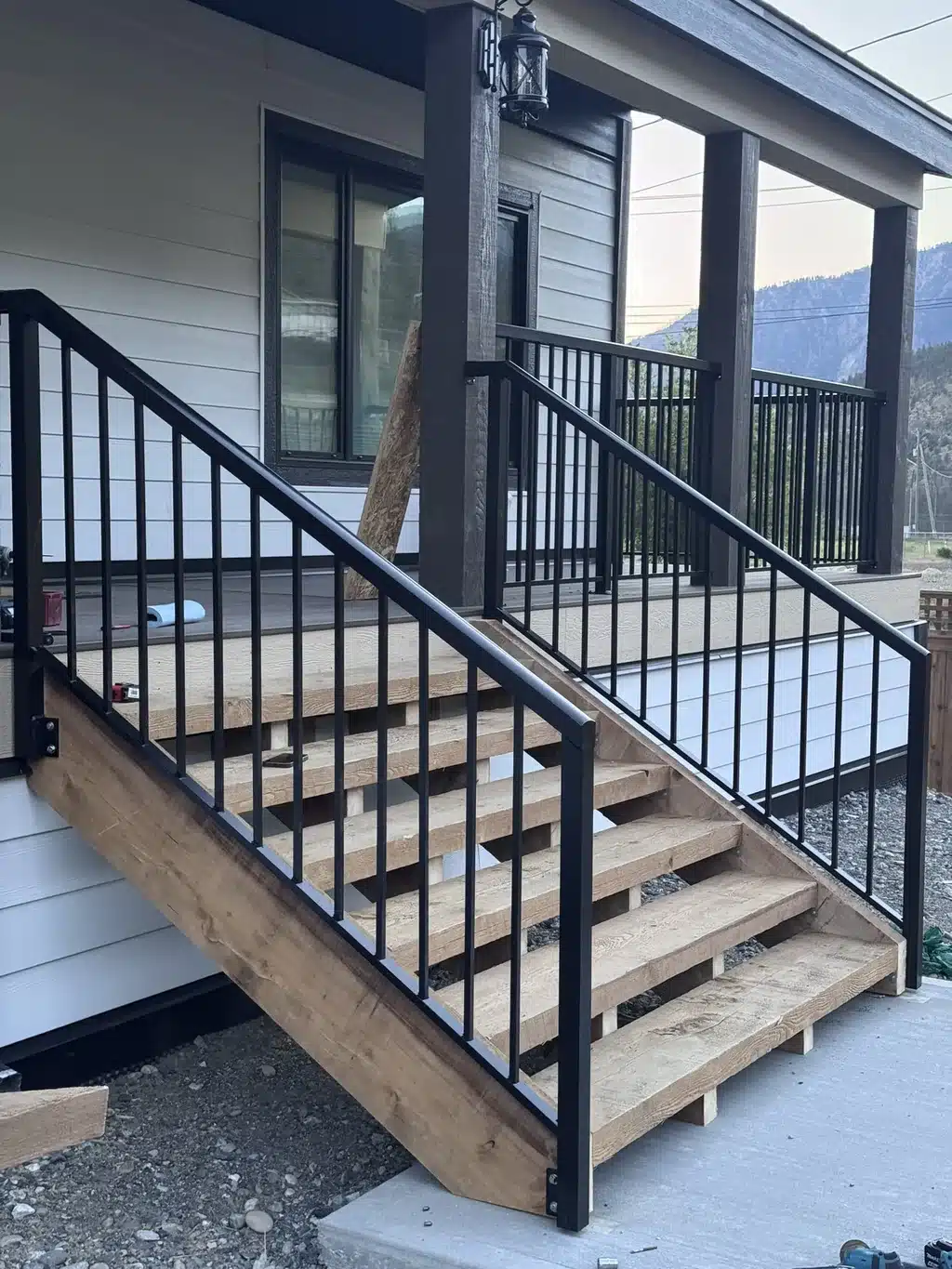
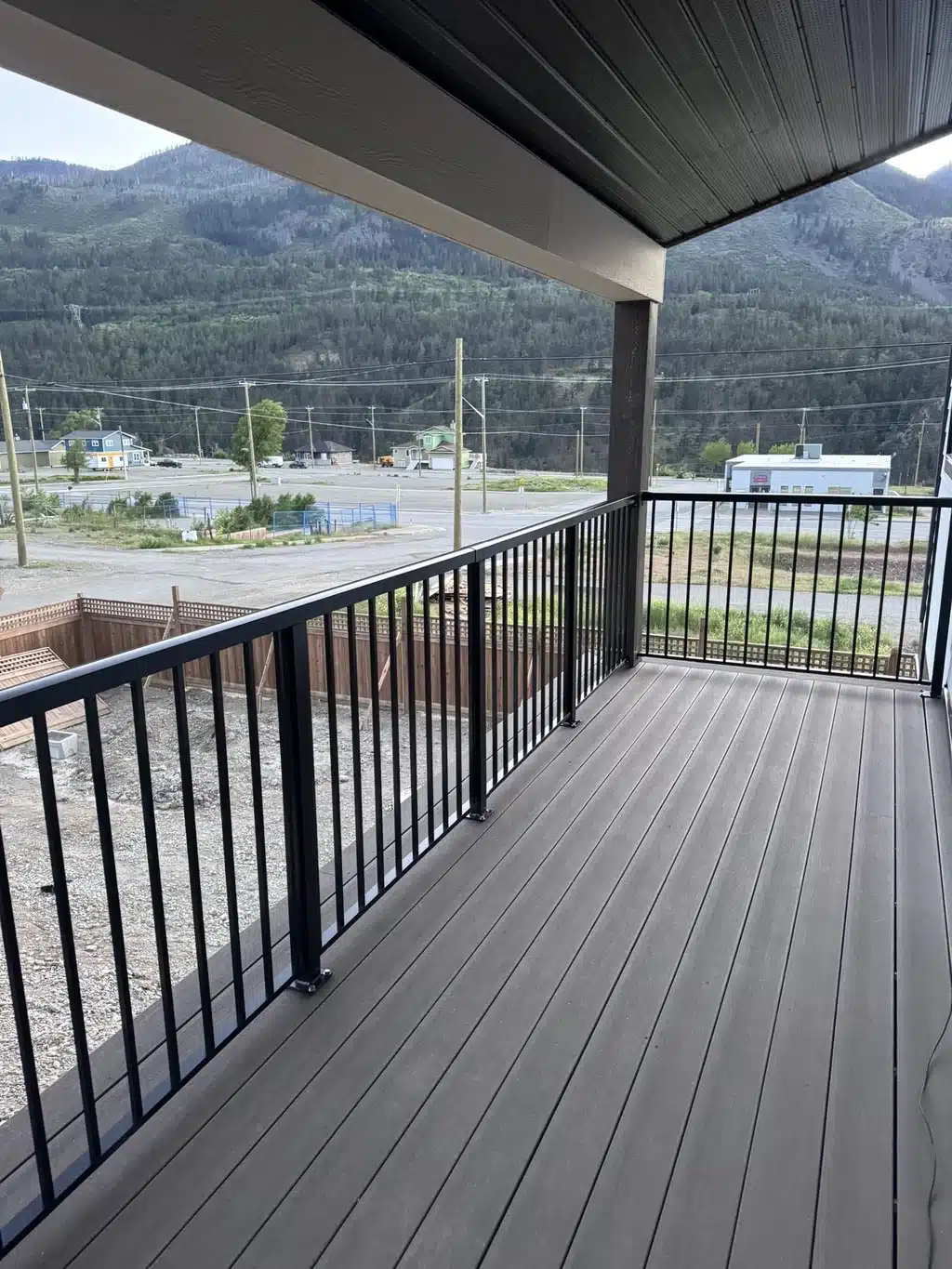
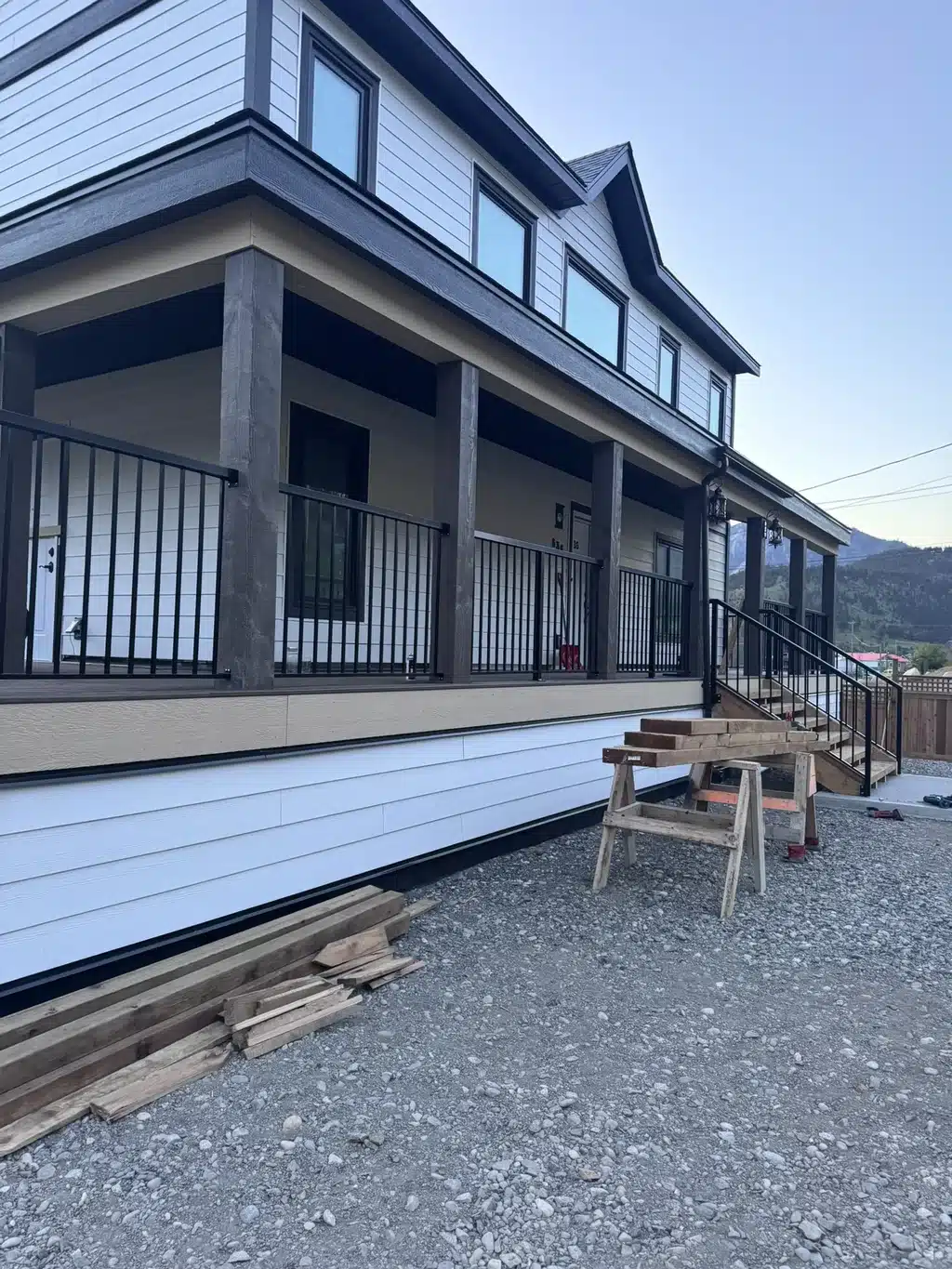
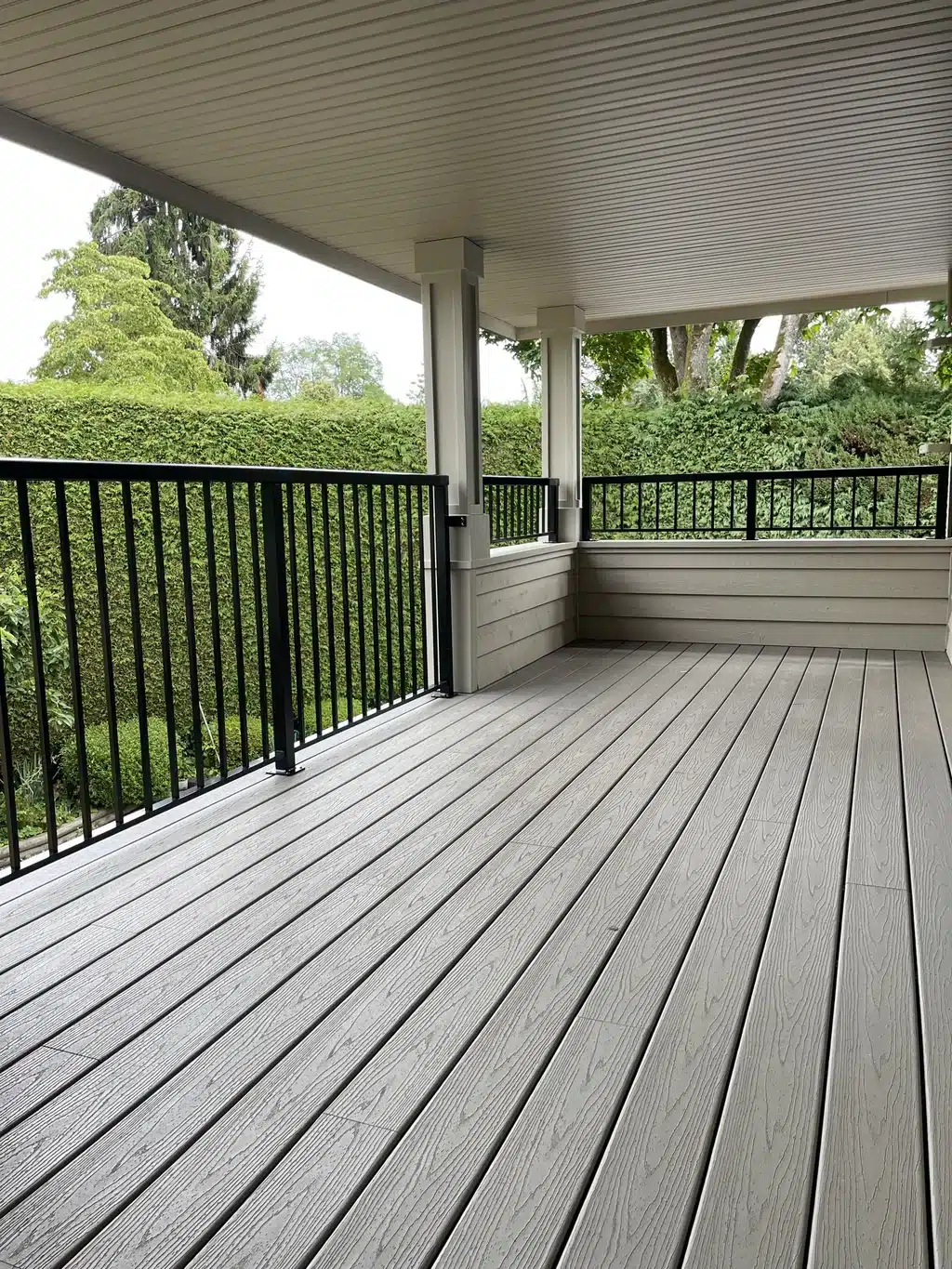
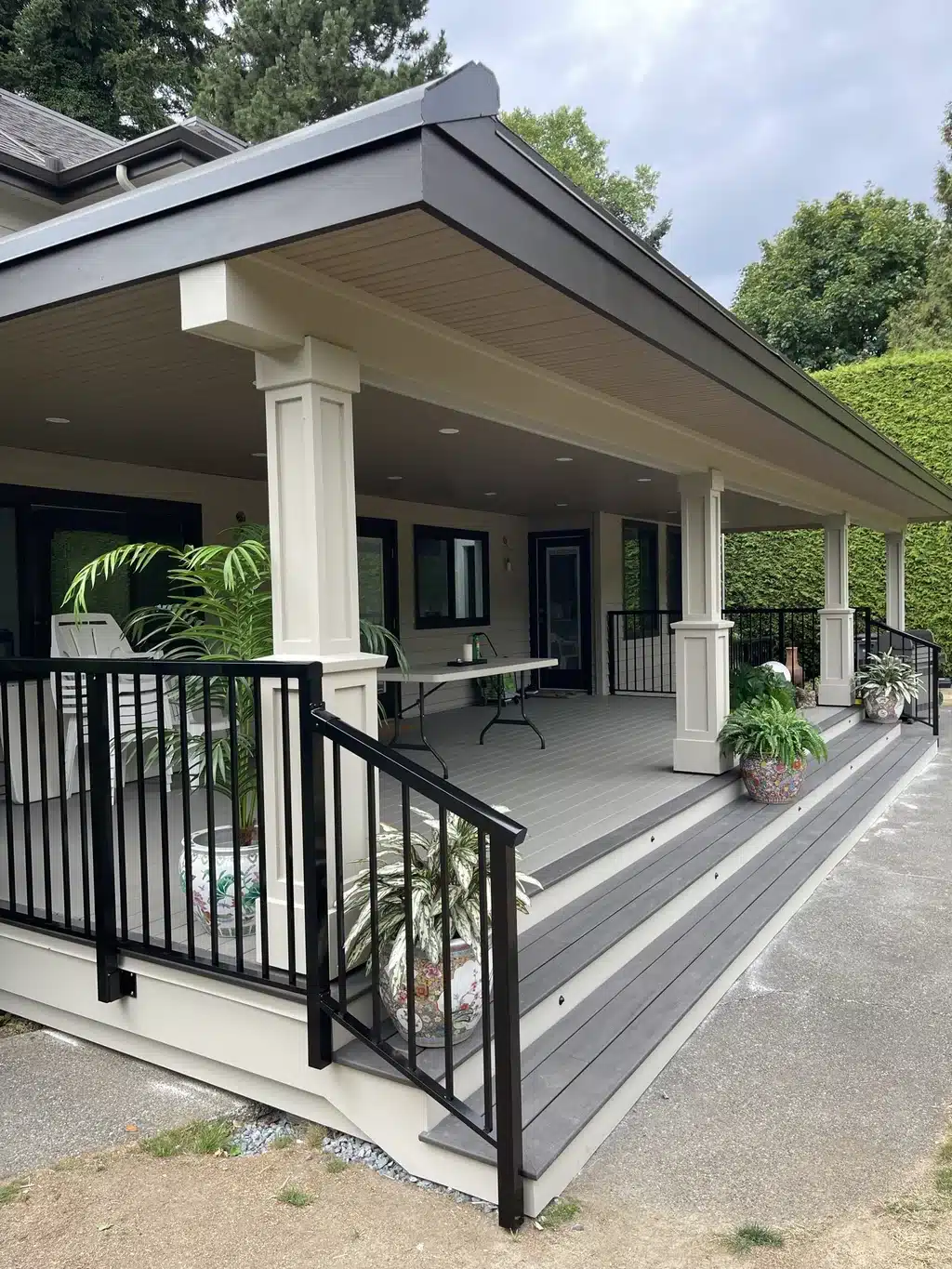
Vertical pickets are a familiar choice for family homes. They are easy to clean and can provide a simple, defined boundary around an outdoor space. The finished system still needs the correct height, opening sizes, and attachment details for the project.
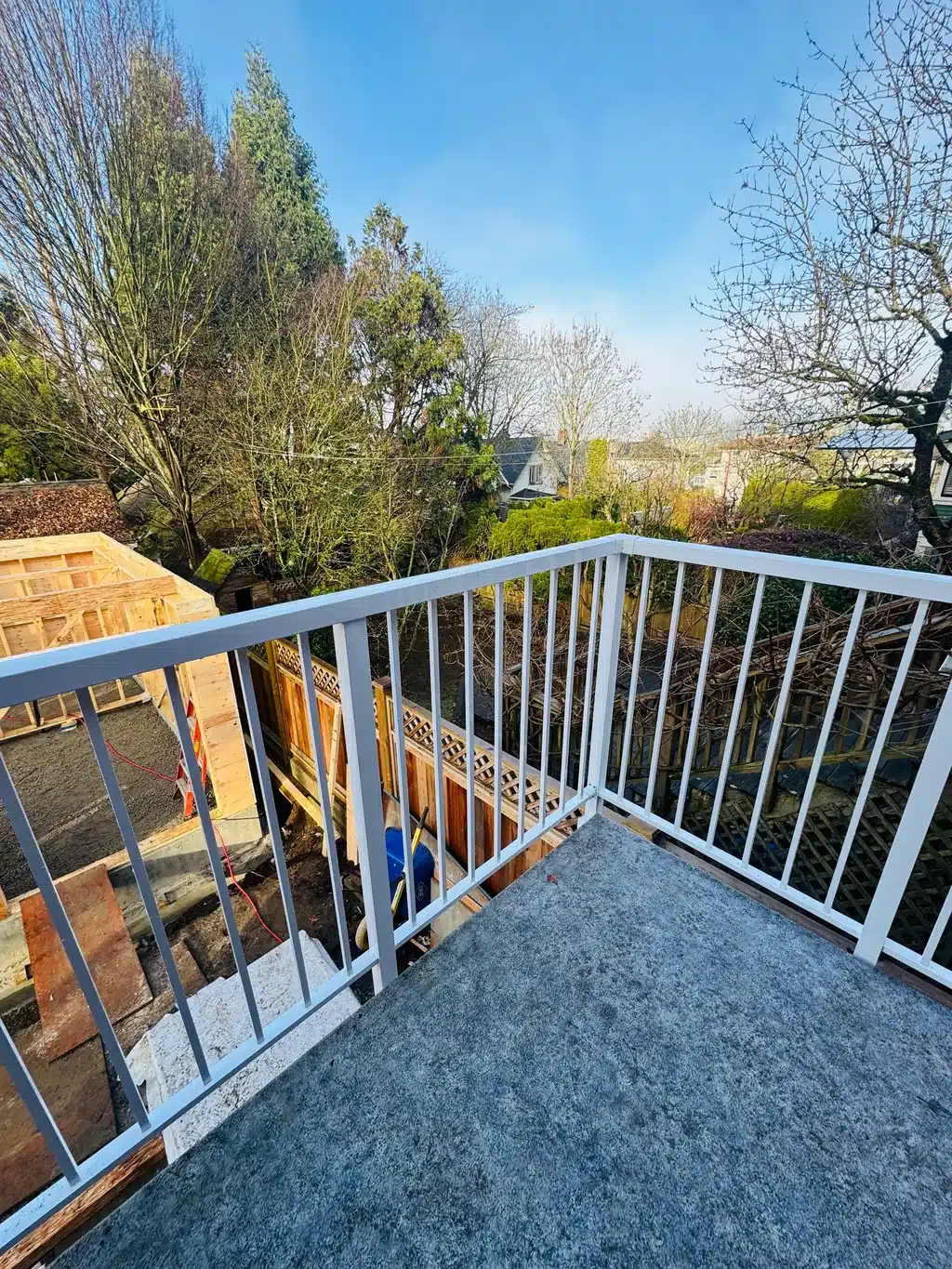
Black, white, bronze, and grey finishes give you options for coordinating the railing with siding, doors, and other exterior details. Our deck railing installation options show how different layouts can work around outdoor living areas. For elevated terraces and building balconies, explore our balcony railing systems.
Aluminum Railings with Glass Panels
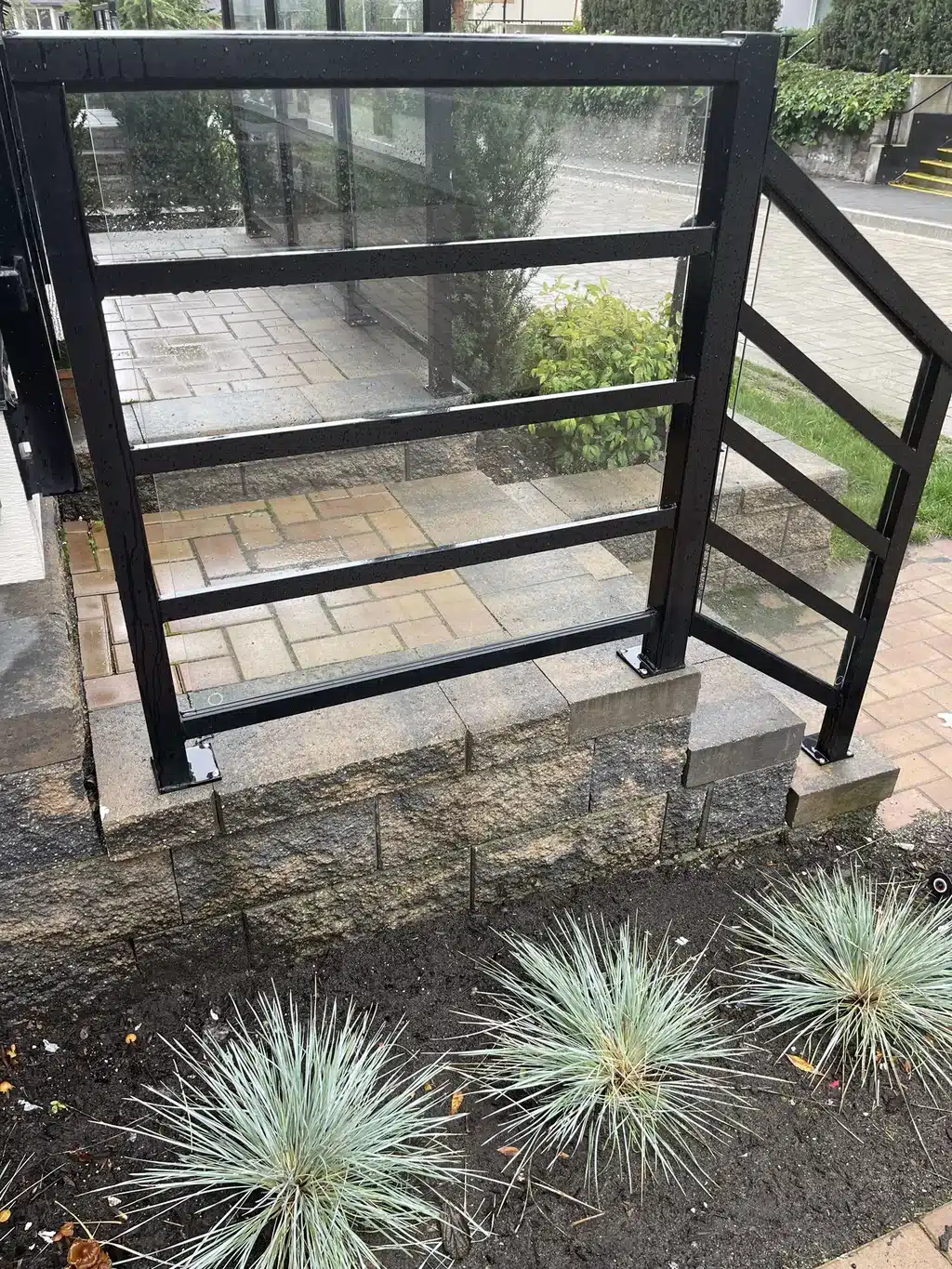
Glass panels set in an aluminum frame preserve the view while giving the railing a visible outline. This combination works well when you want to keep a mountain, garden, or waterfront outlook open without choosing a frameless system.
The frame supports and protects the glass edges, and the installation cost can be lower than a comparable frameless design, depending on the project. Visit our glass railing installation page to compare framed and other glass options.
Aluminum Stair Railings and Graspable Handrails
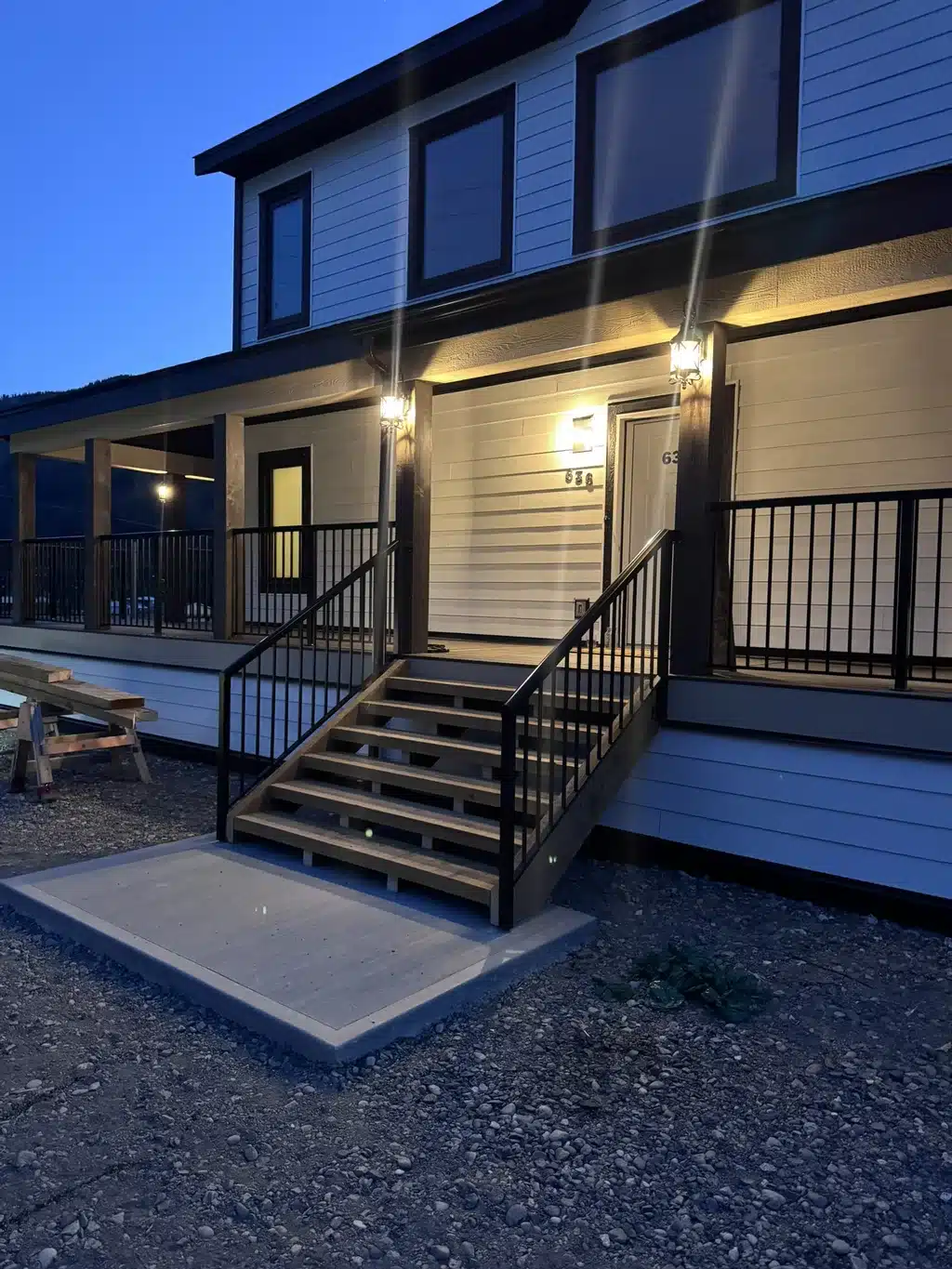
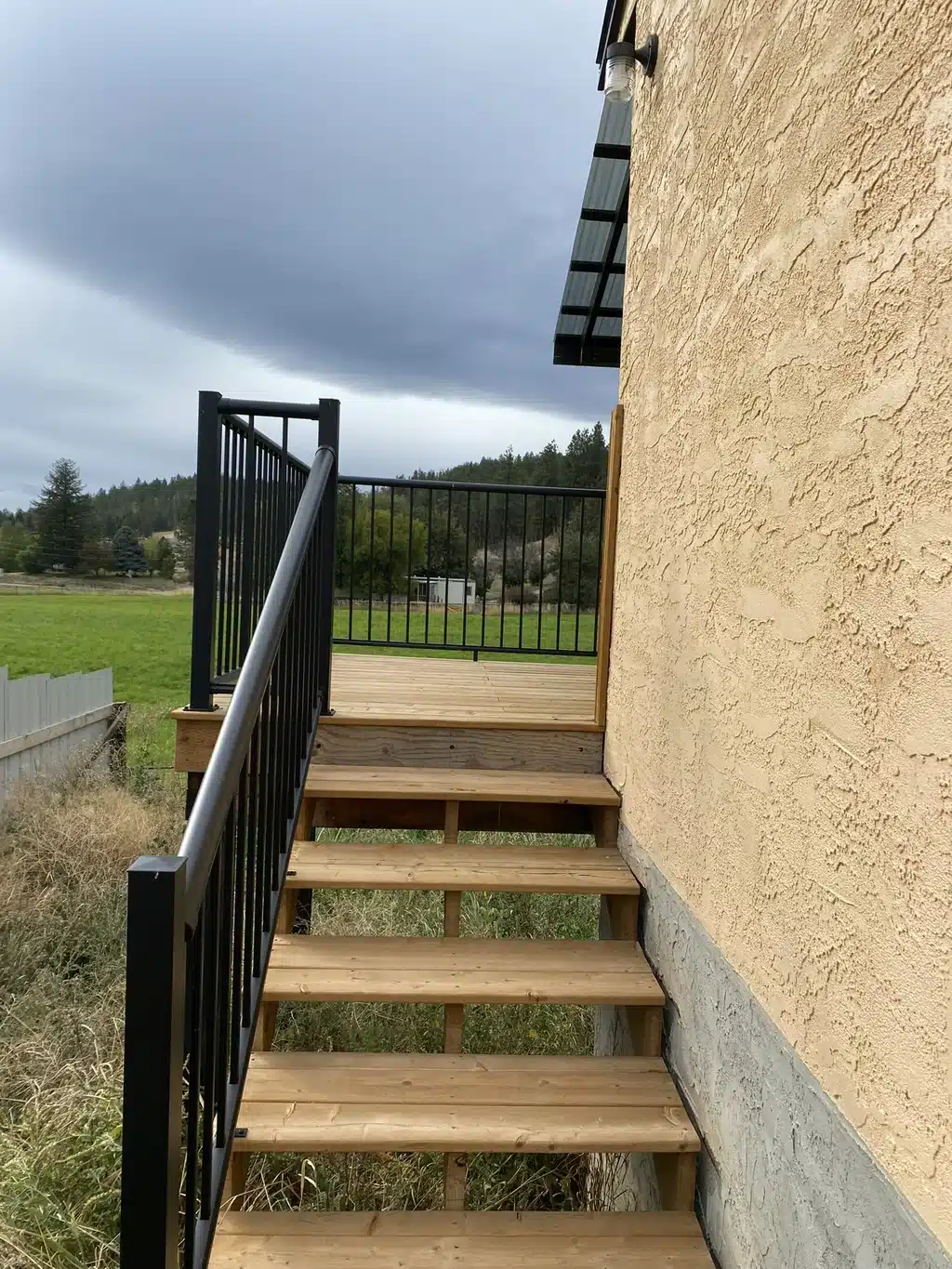
A stair guard and a handrail serve different purposes. The guard helps protect an open edge; the handrail gives the person using the stairs something to hold. Their height, continuity, and shape requirements need to be considered separately.
We often discuss a separate rounded aluminum handrail alongside a picket guard, especially for the exterior stairs found on North Vancouver hillside properties. The required dimensions are checked against the rules that apply to your building and address before the design is finalised.
Aluminum Balcony Replacements for Strata and Commercial Properties
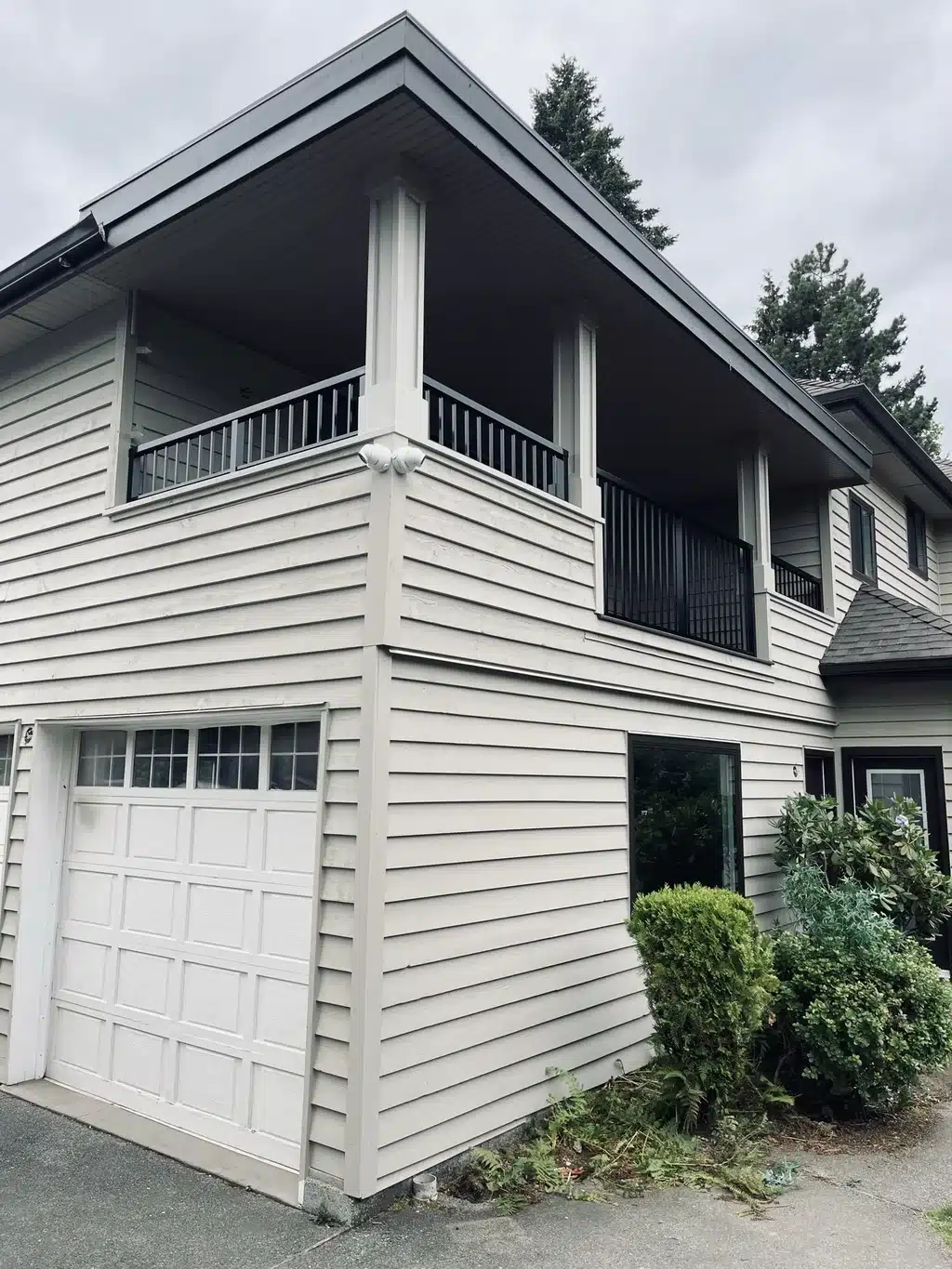
A balcony replacement at a multi-unit property involves more than choosing a new railing style. The building’s classification, existing structure, strata approval, and any required engineering review can affect the scope and schedule.
We can work with your property manager and engineer on planning access and coordinating the work. Explore our commercial railing installation options for larger buildings and projects with shared outdoor spaces.
Coordinating Aluminum Railings with Gates and Fences
If your railing is part of a wider outdoor renovation, planning the metalwork together helps coordinate colours, profiles, and access routes. A deck railing can define an elevated living area, while a fence can establish the garden boundary and a gate can control entry.
Our gate installation in Vancouver service can help you plan an entrance that works with the surrounding metalwork. If you are also updating the perimeter, discuss fence installation in Vancouver with our team so the layout and finish can be considered together.
Component or Welded Aluminum: Which System Fits Your Project?
Many residential aluminum railings use component systems. Factory-made posts, rails, and pickets arrive with their finish applied, then are cut and assembled to suit the site. These systems can be efficient to install, and compatible replacement parts may allow a damaged section to be repaired without replacing the full run.
Welded aluminum railings are fabricated as sections, allowing more flexibility for unusual shapes, curved balconies, and details that a standard component system cannot accommodate. Fabrication and finishing can add time and cost, so the choice should reflect the design rather than appearance alone.
If your project needs a purpose-made layout, our custom railing fabrication service provides a starting point for discussing the geometry, connections, and finish.
Building Code Considerations for Aluminum Guards
A railing that protects an open edge is called a guard in building-code terms. The material does not remove the need to meet the applicable requirements for height, openings, strength, and attachment.
North Vancouver and West Vancouver use the 2024 BC Building Code, which came into effect on March 8, 2024. The City of Vancouver has its own Vancouver Building By-law; the 2025 edition generally took effect on September 15, 2025. The applicable edition and project requirements should be confirmed for your address and permit.
For typical housing projects covered by Part 9, important considerations include:
- Where a guard is needed: A drop of more than 600 mm is a common trigger at an open edge. Adjacent sloping ground can also affect the assessment.
- Guard height: The general minimum is 1070 mm, with 900 mm permitted in specified residential situations. The BC guard-height interpretation explains relevant exceptions, including certain exterior guards where the walking surface is no more than 1.8 m above finished ground.
- Openings: Typical required residential guards must prevent a 100 mm sphere from passing through their openings.
- Climbability: The 140–900 mm restriction is not a blanket rule for every deck. The Part 9 provision applies to required guards protecting a level more than 4.2 m above the adjacent level, subject to its stated conditions.
- Glass and support: Glazing specifications, loads, and the supporting components must suit the proposed guard system.
The Vancouver Building By-law Part 9 provisions set out the detailed requirements for guards and handrails in applicable Vancouver projects. On a sloping North Shore lot, the same deck can be close to the ground at one end and much higher at the other. We review those conditions before recommending heights and mounting details, with the local building authority determining how the requirements apply.
Talk Through Your Aluminum Railing Options
Before booking a site visit, you may want to know more about the people doing the work. Our About Us page introduces the company, our approach, and where we are based.
To talk through your plans, call (604) 836-3232, Monday to Saturday, 9 AM to 6 PM. Share the approximate railing length, the mounting surface, and when you hope to complete the project. Those details help us discuss whether aluminum is a sensible option and what needs to be checked on site.
Coastal Weather, Corrosion, and Caring for Aluminum Railings
Aluminum does not develop the iron rust associated with steel, but it can still corrode. On coastal properties, the finish, fasteners, contact surfaces, and cleaning routine all influence how the system performs over time.
- Salt residue: Properties near the water in Ambleside or Dundarave can collect salt spray. Railings sheltered beneath deep overhangs may need additional cleaning because rainfall does not rinse them.
- Contact with other metals: Dissimilar metals in damp conditions can create corrosion risks. Fasteners and isolation details need to be compatible with the railing system; choosing stainless steel alone does not resolve every connection detail.
- Pressure-treated wood: The treatment chemistry and the manufacturer’s instructions matter where aluminum components attach to timber. Appropriate separation or compatible mounting details may be needed.
- Finish specification: AAMA 2604 and AAMA 2605 describe performance requirements for architectural aluminum coatings. Ask which specification the proposed finish meets and what care it requires. The FGIA coating standards overview explains these specifications.
Follow the system manufacturer’s cleaning instructions. A rinse, mild soap, and a soft cloth are usually the starting point, with more frequent cleaning near salt water. Avoid abrasive pads and aggressive pressure washing. Ask about the recommended repair method if you notice a chip or damaged finish.
Replacing Wood, Iron, or Older Aluminum Railings
A new railing is only as dependable as the structure it attaches to. Before planning a replacement, we look at the existing mounting locations and discuss whether preparation or structural work is needed.
- The condition of deck fascia, rim joists, and other timber connection points.
- Cracks, spalling, or deterioration around concrete balcony edges and old post locations.
- Any required building permit, strata approval, or engineering review.
- Whether mounting posts on top of the deck or to its side suits the structure and appearance.
Replacement is not always the appropriate first step. If the problem is limited to an existing section or connection, our railing repair services may be worth considering. For suitable metalwork, our welding services may offer another repair option, depending on the material and condition.
How We Plan an Aluminum Railing Installation
- Site visit and measurements: We measure the runs and stairs, review the mounting surfaces, and record the existing conditions. Photographs supplied beforehand can help begin the discussion.
- Written quote: We describe the proposed system, colour, height, mounting method, and any gates or other project details so the scope is clear.
- Approvals and preparation: We discuss any required strata consent, permits, or engineering documentation and clarify responsibilities before scheduling the work.
- Ordering or fabrication: Timing depends on the selected system, finish, and custom requirements. We discuss the expected schedule for your project.
- Installation: We fit the railing to the planned layout and take care around the surrounding decking, siding, and landscaping.
- Final walk-through: We review the completed installation and explain how to care for the finish.
What Affects Aluminum Railing Costs in Vancouver?
Aluminum railing quotes often use the length of the proposed system as a starting point, but a per-foot figure does not describe the whole project. The details below can make a substantial difference:
- Infill: Pickets and glass panels have different material and installation costs.
- Stairs: Sloped sections and landing connections can require more fitting than straight runs.
- Mounting: Fascia brackets, concrete drilling, and preparation of the supporting structure affect the work involved.
- Height and layout: Taller guards, additional corners, and changes in level affect materials and labour.
- Gates and finishes: Access gates and custom colours can change both the cost and schedule.
- Replacement work: Removal, disposal, and any necessary repairs to the existing structure need to be included in the scope.
The final cost depends on measurements, the selected materials, installation conditions, and any required supporting work. We provide a written, itemised quote after reviewing the site so you can see what is included and understand how a change in scope would affect the price.
Aluminum Railing Projects Across Vancouver and the North Shore
We serve properties in our North Vancouver service area, our West Vancouver service area, and our Vancouver service area. Our office is on Lonsdale Avenue in North Vancouver, and we also take on projects in Burnaby, Coquitlam, Surrey, and Langley.
Whether your project involves an older deck in Lynn Valley, an exposed balcony near the West Vancouver waterfront, or exterior stairs at a Vancouver home, the site conditions help determine the design. Browse our project gallery for examples of our metalwork and railing styles.
Get a Quote for Your Aluminum Railing Project
As a railing contractor in Vancouver, we can help you compare aluminum with the other railing materials we work with. If another option better suits your property’s design or intended use, we will explain the reasons.
Send your address, approximate railing length, and a few photographs through our contact page, or call (604) 836-3232. We can discuss the project, arrange a site visit, and prepare a written quote based on the measurements and installation requirements.